
banida digital marketing agency logo
update

Banida digital

update
  • Home
  • Contact Us
  • All Posts
  • Social Media
  • 5-Star Reputation
  • SEO
  • Traffic
  • Funnels
  • Blogging
  • Advertising
  • Website
May 15.2026
12 Minutes Read

PPC Campaigns for Dentists: Get Instant Patient Leads

dynamic dental office scene ppc campaigns for dentists smiling dentist welcoming a new patient, bright dental office, patient leads, modern dental equipment

More than 80% of patients now turn to search engines when looking for a new dentist, making online visibility a critical factor for modern dental practices. Imagine your dental office appearing at the very top of search results precisely when local patients are actively searching for care. With PPC campaigns for dentists, you can bypass the slow pace of traditional marketing and immediately connect with people who are ready to schedule an appointment.

In this guide, you’ll discover how strategic PPC advertising for dental practices helps generate qualified leads, increase appointment bookings, and keep your schedule consistently full. Learn how successful dental clinics use targeted ads, smart keyword strategies, and optimized landing pages to stay ahead of competitors and attract patients faster.

Why PPC Campaigns for Dentists Are the Fastest Way to Generate Patient Leads

Pay-Per-Click (PPC) advertising is a digital marketing strategy where businesses pay a fee each time someone clicks on their online advertisement. These ads typically appear at the top of search engine results or within social media platforms, allowing businesses to gain immediate visibility for targeted keywords or audiences. For dental practices, PPC campaigns—such as those run through Google Ads or social media platforms—place your services directly in front of potential patients who are actively searching for treatments, clinics, or urgent dental care.

Because PPC ads appear instantly once campaigns are launched, they can generate patient leads far faster than strategies like SEO or word-of-mouth referrals. For example, a dental implant clinic that targets keywords like “dental implants near me” in their city can appear above organic search results and map listings, capturing high-intent searches from people ready to book an appointment. With compelling ad copy and a well-optimized landing page, PPC campaigns can begin driving patient inquiries almost immediately—making them one of the most effective growth tools for dentists competing in a crowded local market.

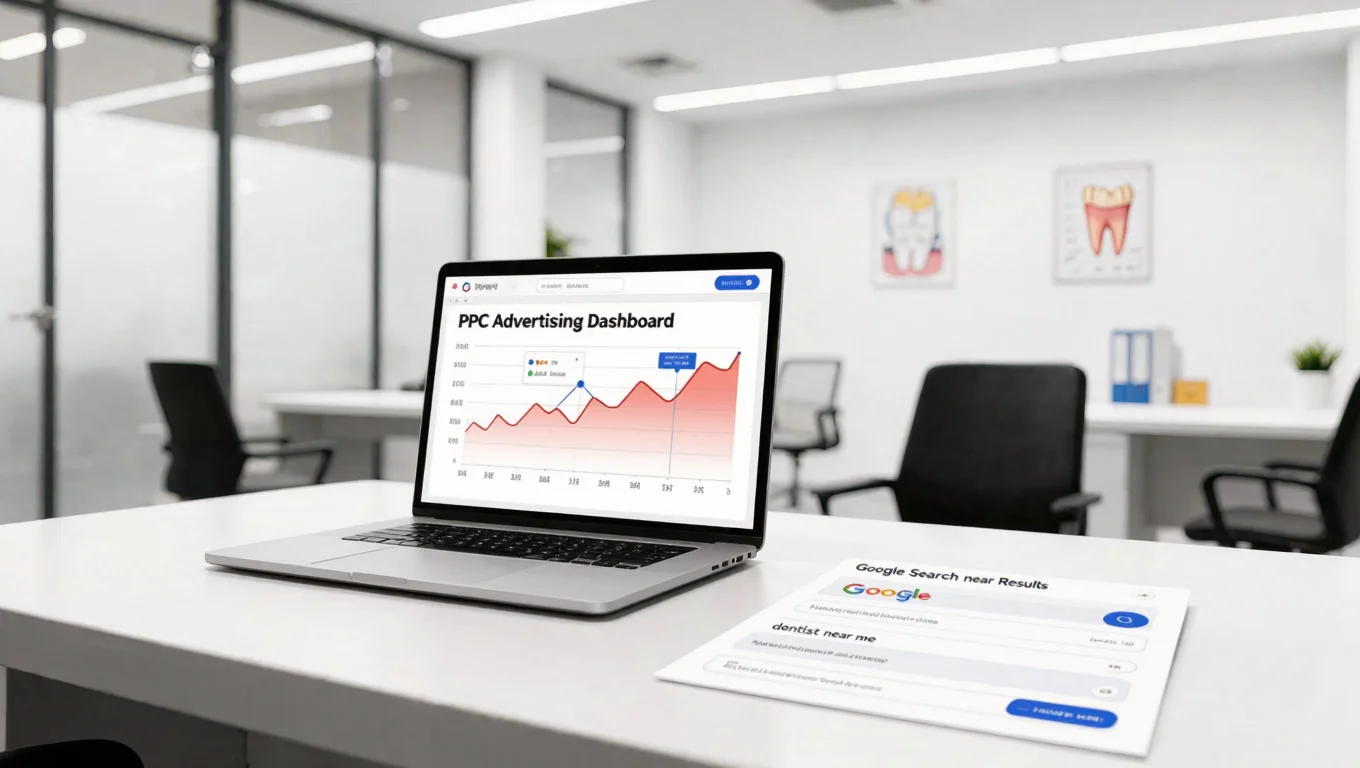
digital marketing ppc campaigns for dentists analyzing campaign results dental office google ads ppc ad data charts dental ppc

Unlocking Growth: What You'll Gain from PPC Campaigns for Dentists

Embracing PPC campaigns for dentists unlocks a world of strategic advantages. First, you gain data-driven targeting, ensuring every dollar of your ad spend hits your ideal audience—people actively looking for dental services you provide. With precise keyword research and ad scheduling, your campaigns appear just as potential patients are searching.

You’ll also benefit from transparent performance tracking. Each PPC ad’s effectiveness is visible and measurable, allowing for real-time optimization and efficient budget use. Plus, the ability to test different ad copy, offers, and landing page variations means you’re always improving, driving more and more qualified leads over time.

dental ppc campaign manager reviewing patient lead metrics, organized dental office, graphs, landing pages, performance charts ppc advertising

Breaking Down Dental PPC: What Makes PPC Advertising Important for Dental Practices

The Unique Dental Market Landscape and Its Digital Challenges

The dental market is more competitive than ever, with dental practices vying for attention both on Main Street and online. Patients now have countless choices at their fingertips thanks to search engines, making it tough for even established practices to remain top-of-mind. Unlike other industries, dental services are a high-trust, high-urgency purchase—patients search when they have an immediate need, like dental pain or a cosmetic concern.

This immediacy makes traditional dental marketing channels like print ads and referrals far too slow for maximum patient acquisition. In contrast, PPC advertising positions your practice in front of high-intent patients at the exact decision-making moment. Online reviews and localized map listings add another layer of complexity, requiring a strategy that breaks through digital noise and builds credibility fast.

How PPC Advertising Stands Out Against Other Dental Marketing Methods

Unlike long-term SEO or expensive offline campaigns, PPC advertising delivers instant, trackable results. With a PPC ad, you pay only when a potential patient clicks—meaning each dollar spent is measurable. Compared to radio, newspaper, or even direct mail, PPC campaigns for dentists give you laser-targeted control over who sees your ads and when.

Google ads and social PPC platforms offer in-depth analytics to guide your decision-making, letting you optimize your bids and ad copy in real time. With split-testing, you can continually improve lead quality, driving up your return on investment and outpacing competitors who rely on passive, traditional marketing.

dental market digital marketing comparison ppc ads versus traditional marketing for dentists

Core Components of a Successful PPC Campaign for Dentists

The Anatomy of a High-Converting Dental PPC Campaign

Building a winning dental PPC campaign begins with in-depth keyword research. Uncovering what potential patients actually search for—like “emergency dentist open now,” “invisalign cost,” or “dental implants near me”—ensures your PPC ads hit the most motivated audience. Next, attention-grabbing ad copy highlights your dental expertise, unique selling points (like free consultations or same-day appointments), and includes a clear call to action.

Optimized landing pages are the linchpin. Instead of sending clickers to your homepage, targeted landing pages speak directly to the patient’s intent—whether it’s booking an implant consultation or redeeming a whitening offer. Strong trust signals (like reviews, certifications, and a direct phone number) prompt immediate conversions. Finally, leveraging negative keywords ensures you avoid wasted clicks by preventing ads from showing on irrelevant searches, stretching your ad spend further.

Key Metrics to Track in PPC Campaigns for Dentists

Metric

Why It Matters

Optimal Benchmark

Click-Through Rate (CTR)

Shows if your ad copy and targeting align with patient intent

Above 3-5%

Cost Per Conversion

Reveals what you pay for each patient inquiry or booking

$10–$50 (varies by city & service)

Conversion Rate

Tracks the % of clicks turning into patient leads

15–30% on high-converting landing pages

Impressions

Indicates how often your ad is seen—vital for reach

Matched to audience size

dental ppc campaign key metrics infographic dental ppc click through rate conversion rate cost per conversion leading performance in ppc advertising

Getting Started: Setting Up PPC Campaigns for Dentists Step-by-Step

Choosing the Right Platforms (Google Ads, Microsoft Ads, Facebook PPC)

Not all PPC platforms are created equal for dental practices. Google Ads is the gold standard, matching your PPC campaign to high-intent searches right as patients are looking for providers. Microsoft Ads (Bing Ads) can supplement, especially if your local demographic includes older patients or corporate audiences. Facebook PPC excels for branding and retargeting—catching potential patients as they browse social feeds or reminding website visitors to book an appointment.

Most dentists find starting with Google Ads produces the fastest, highest-quality leads, thanks to detailed targeting and local extensions. Diversifying with Facebook ads lets you run awareness campaigns, share educational content, and retarget website visitors who didn’t book yet. Advanced dental PPC advertisers integrate multiple platforms to cover every patient touchpoint, maximizing exposure and ROI.

Keyword Research for Dental Practices: Finding Patient-Driven Opportunities

Strategic keyword research is the backbone of successful PPC campaigns for dentists. Go beyond generic terms like “dentist near me” and dig into service keywords (“emergency tooth extraction,” “affordable veneers”) and local intent phrases (“children’s dentist [your city]”). Use keyword planner tools, your own patient queries, and competitor analysis to build a tailored list.

Consider negative keywords too—block irrelevant searches like “dental school” or “free dental care” unless they fit your offerings. Continuously monitor which keywords convert (using your platform analytics) and adjust bids or add new terms as patient behavior shifts over time. This keeps your ad spend laser-focused on qualified leads with real dental needs.

Creating Compelling PPC Ad Copy for Maximum Engagement

Ad copy makes or breaks your PPC ad. Use clear, authentic language and highlight what sets your dental practice apart—are you pain-free, open late, or have 5-star reviews? Leverage urgency (“Same-Day Appointments!”) and trust (“Trusted by 2,000+ Patients”) to draw attention. Always include a strong call to action, like “Book Now,” “Call Today,” or “Claim Your Free Consultation.”

For dental services, patients want information quickly—make sure your ad copy matches their search query and reassures them. Incorporating benefits like “invisible braces specialists” or “gentle children’s dentist” makes your ad more relevant, improving click-through and conversion rates. Keep testing new headlines and descriptions to boost your lead volume.

dental practice ppc ad copy brainstorming, creating engaging ad copy ideas for dental services, ppc campaign optimization, writing ad copy dental market

Landing Page Optimization: Convert Clicks to Dental Appointments

Your landing page is the patient’s first impression after clicking your PPC ad. Unlike a homepage, a high-performing landing page is highly specific—mirroring the ad’s promise (“Free Whitening Consultation”) and focused solely on conversion. Elements like easy-to-find contact forms, visible phone numbers, real patient reviews, and minimal distractions are key.

Landing pages optimized for dental ppc campaigns cut bounce rates and drive more appointments. Include trust badges, clear service descriptions, and before/after photos where relevant. Test different layouts and calls-to-action; even small tweaks can raise your conversion rate by 10–20% or more.

Setting Budget, Bids, and Ad Schedule for Your Dental PPC Campaign

Determining your PPC budget means balancing patient acquisition goals with local competition. Calculate how many new patients you need per month and estimate your cost per conversion (often $20-$100, depending on service and market). Set daily budgets accordingly, allocating more to high-value services like dental implants or Invisalign.

Use smart bid strategies—start with automated bidding in Google Ads to maximize visibility, then adjust as you identify your top-performing keywords. Schedule your ads for when patients are most likely searching—often before work, during lunch, or in the evening—and consider boosting bids for mobile searches, as many patients look for immediate care from their phones.

dental ppc roi analyst reviewing charts, ppc advertising metrics landing page conversion dental practice performance

Enhancing Dental PPC Performance with Google Ads Extensions and Advanced Tactics

Utilizing Ad Extensions to Stand Out in Search Results

Ad extensions give your PPC ad more real estate and richer information in search results—making your practice look more trustworthy and convenient. Sitelink extensions can link directly to appointment forms, specific services, or reviews. Call extensions display your phone number directly in the ad, encouraging instant patient calls. Location extensions help nearby patients navigate right to your front door.

Utilizing these features increases click-through rates and lowers your cost per conversion. In a crowded dental market, ad extensions are a best practice for boosting visibility, credibility, and patient engagement with every impression.

Negative Keywords: Eliminating Budget-Drainers in Dental PPC

Negative keywords ensure you’re not wasting ad spend on irrelevant or low-quality searches. For dental PPC campaigns, this could mean excluding keywords like “dental school,” “DIY teeth whitening,” or “free dental clinic”—unless such leads align with your goals. By routinely reviewing which searches trigger your ads, you can add new negative keywords as needed, keeping your budget focused on high-value patients.

This strategy dramatically improves return on investment, reduces wasted clicks, and raises your conversion rate. Advanced dental PPC advertisers monitor negative keyword effectiveness weekly, constantly refining to match real-world search intent.

Retargeting Strategies for Recapturing Interested Dental Patients

Lead wasn’t ready to book? Retargeting ads follow visitors who left your site without converting—displaying gentle reminders as they browse other sites or scroll social media. For dental practices, this might mean showing a special implant or cleaning offer to website visitors or recent inquirers.

Retargeting ads keep your name top-of-mind, turning tire-kickers into booked appointments even weeks after their initial search. Done right, retargeting lifts total conversions and increases lifetime patient value from your dental PPC campaigns.

dental ppc campaign results happy dental team celebrating success in ppc advertising lead growth bookings dental practice

How to Promote Your Dental Office with PPC Campaigns that Deliver Measurable Results

Aligning PPC with Broader Dental Marketing for Maximum ROI

The best-performing dental PPC campaigns don’t work in isolation—they align PPC with your website SEO, online reviews, email follow-ups, and social media. Use PPC to capture immediate interest and nurture leads with email reminders or compelling content. Tracking tools let you see what source brought each new patient, so you can double down on what’s working.

Integrating PPC with other dental marketing drives even better ROI—building patient trust, increasing lifetime value, and ensuring every lead has a frictionless journey from click to chair.

Comparing PPC Ads for Dental Practices: Which Platform Returns the Best ROI?

Choosing the right PPC platform can significantly impact how effectively your dental practice attracts new patients. Each advertising network offers different advantages depending on your campaign goals, target audience, and budget. While some platforms focus on capturing patients actively searching for dental services, others are better suited for building awareness and re-engaging potential patients who have previously interacted with your brand. Understanding these differences helps dental practices allocate advertising budgets more strategically and maximize overall return on investment.

Google Ads typically generates the highest-quality leads because it targets patients actively searching for dental services such as “emergency dentist near me” or “teeth whitening dentist.” Although the average cost per click is higher, the strong search intent often results in faster appointment bookings and measurable ROI. Facebook Ads, on the other hand, work well for brand awareness, promotions, and retargeting campaigns by using visually engaging formats and advanced audience targeting. Microsoft Ads (Bing) can serve as a valuable supplemental channel, often offering lower click costs and reaching an older demographic with strong purchasing power. By combining these platforms strategically, dental practices can capture high-intent search traffic, build brand recognition, and nurture potential patients throughout their decision-making journey.

Google Ads vs Facebook Ads vs Microsoft Ads for Dental Practices

Platform

Avg. Click Cost

Lead Quality

Ad Customization

Best For

Google Ads

$5–$15

Very High (search intent)

Highly flexible

Immediate appointments, local searches

Facebook Ads

$1–$8

Moderate (browsing audience)

Strong native & visual options

Brand awareness, retargeting, promotions

Microsoft Ads (Bing)

$2–$10

Good (older or business users)

Good; less crowded

Supplemental patient reach

ppc ads platform comparison google ads facebook ads microsoft ads for dentist ppc campaign roi

Real Results: ROI, Metrics, and Common Pitfalls in Dental PPC Advertising

How to Measure Success: Key Performance Indicators for Dental PPC

Success in dental PPC advertising comes down to tracking the right metrics: Click-Through Rate (CTR), Cost Per Conversion (CPC), Conversion Rate, and Total Return on Investment (ROI). By setting up conversion tracking through Google Ads or Facebook Ads, you can pinpoint which keywords, ad copy, and landing pages produce the most patient bookings. Monthly reporting lets you spot trends and make smart adjustments—ensuring every ad dollar delivers results.

Additional KPIs include phone call tracking (to link calls to specific ads), appointment forms submitted, and reviews left post-appointment. These granular metrics ensure you know what’s driving real business growth, not just clicks.

Avoiding Common PPC Campaign Mistakes in the Dental Market

Successful PPC campaigns don’t just rely on launching ads—they depend on avoiding common mistakes that can quickly drain your marketing budget. Many dental practices overlook important elements such as negative keywords, which help filter out irrelevant searches, or they direct ad traffic to generic homepages instead of highly targeted landing pages. Others fail to take advantage of ad extensions that highlight services, locations, or call options—valuable features that can significantly increase click-through rates and patient inquiries.

To maximize results, dental practices should regularly monitor campaign performance and make small, strategic improvements over time. Review metrics weekly, test new ad copy, and continually optimize landing pages to improve conversions. Remember, PPC is not a “set-it-and-forget-it” strategy. Ongoing adjustments and data-driven decisions help ensure your campaigns remain competitive, attract high-quality patient leads, and deliver a stronger return on investment.

Building a Sustainable PPC Strategy for Continuous Dental Practice Growth

Achieving long-term success with PPC campaigns in the dental market requires a commitment to consistent optimization and strategic testing. Regular A/B testing of ad copy and landing pages helps identify which messaging and offers resonate most with potential patients. At the same time, refreshing your keyword lists ensures your campaigns stay aligned with how patients’ search behaviors evolve. As trends, seasons, and patient needs change, updating your targeting strategy allows your dental practice to remain visible for the most relevant searches.

Equally important is regularly reviewing campaign performance to identify opportunities for improvement. Monthly analysis of metrics—such as click-through rates, conversions, and cost per lead—can reveal which strategies are driving results and which areas need adjustment. Incorporating remarketing campaigns can further strengthen your marketing efforts by reconnecting with previous website visitors and encouraging them to book appointments. With continuous monitoring and refinement, PPC campaigns can become a powerful long-term engine for sustainable patient growth.

dental marketing ppc consultant answering questions about ppc campaigns for dentists, consultation setting

Frequently Asked Questions on Dental PPC Campaigns

How Long Before You See Results from Dental PPC Ads?

Most practices see new patient inquiries within days of launching a well-targeted dental PPC campaign. Full optimization typically takes 2–4 weeks, but the instant visibility of PPC means bookings can start flowing in almost immediately, especially for high-demand dental services.

What Budget Should Dental Practices Set for PPC Advertising?

Budgets vary by market, but most dental practices see strong results from an initial budget of $1,000–$3,000 per month. Focus on high-value service lines (like implants or orthodontics) for your biggest ROI, and scale up as you see cost-per-conversion decrease with improved optimization.

What’s the Difference Between Google Ads and Facebook Ads for Dental Practices?

Google Ads targets patients actively searching for dental care—making it best for immediate leads and bookings. Facebook Ads target patients by location, interests, and demographics—excellent for brand awareness, building an audience, and retargeting website visitors who didn’t convert on the first visit.

What Are the Best Keywords for Dental PPC Campaigns?

The best dental PPC keywords match your services and local patient intent—think “emergency dentist near me,” “teeth whitening [city],” “dental implants cost,” or “kids dentist open now.” Review your search terms report weekly for new ideas and negative keyword gaps to fill.

long term dental ppc campaign strategies, dental marketer monitoring ppc ad progress and metrics, market growth tracking

Take the Next Step Toward Rapid Patient Growth with Expert PPC Strategies

If you’re ready to attract more high-intent patients and fill your appointment calendar faster, now is the time to invest in a smarter PPC strategy. Well-executed PPC campaigns for dentists can place your practice directly in front of local patients who are actively searching for dental services. With the right targeting, compelling ad copy, and optimized landing pages, every click becomes a valuable opportunity to convert a searcher into a loyal, long-term patient.

At Banida Digital, we specialize in building data-driven PPC campaigns designed specifically for dental practices. Our team helps you maximize your advertising budget, generate qualified leads, and achieve measurable growth. Visit our website or contact us today to schedule a free consultation and discover how a customized PPC strategy can help your dental practice stand out, attract more patients, and grow with confidence.


Get Instant Dental Patient Leads

Advertising

0 Comments

Write A Comment

*
*
Please complete the captcha to submit your comment.
Related Posts All Posts
06.08.2026

Avoid Common Pitfalls in Consistent Brand Messaging Today

Did you know that brands maintaining consistent messaging across all channels can boost revenue by up to 33%? Consistency isn’t just a marketing buzzword—it’s the driving force behind customer loyalty, stronger recognition, and sustained business growth. When your messaging wavers, competitors can quickly capture your audience’s attention. In this article, we’ll explore practical strategies to keep your brand voice clear, cohesive, and unforgettable across every touchpoint.Unveiling the Impact of Consistent Brand Messaging: Startling Facts Every Marketer Must KnowConsistent brand messaging has the power to transform your brand’s success across every marketing channel. Brands maintaining consistent messaging are not only seen as more reliable but also become instantly recognizable within crowded markets. Data reveals that clear and unified messaging across social media platforms, websites, and print materials directly correlates with higher customer trust, greater brand recognition, and significantly improved customer experience. With every interaction, potential customers grow more familiar and comfortable with brands that avoid fragmentation in their brand identity.For marketers, the challenge is clear: ensuring every touchpoint reflects the same brand values, visual identity, and tone of voice requires robust alignment across the marketing team. In today’s digital-first environment, fragmented brand guide adherence or inconsistent visual elements can dilute your messaging and confuse your audience. By mastering consistent branding, you not only avoid these pitfalls but position your business for top-of-mind status in every customer’s journey.Understanding Consistent Brand Messaging and Brand ConsistencyWhat is Consistent Brand Messaging?Consistent brand messaging is the practice of communicating your brand's core values, personality, and mission clearly and uniformly across every channel and touchpoint. Whether your audience interacts with your social media platform, website, or printed marketing materials, they should encounter the same tone of voice, messaging style, and visual identity. This uniformity in brand voice ensures potential customers never receive conflicting signals about who you are or what you offer. The foundation of consistent messaging lies in a thorough brand guide, a document that outlines everything from acceptable phrasing to the exact color palette.The best brands recognize the importance of repetition and clarity. By constantly reinforcing their messaging, they make themselves instantly recognizable in the marketplace. Over time, this enables the marketing team to maintain brand consistency regardless of the media platform or marketing channel. A well-executed strategy starts with a strong internal alignment—making sure every team member understands and applies the style guide, tone of voice, and visual elements that make up the brand's public image.As you refine your approach to brand messaging, it's helpful to explore how a comprehensive brand strategy can further support your efforts.Defining Brand Consistency and Maintaining Brand IdentityBrand consistency goes beyond just repeating a catchy slogan. It encompasses all visual and verbal cues associated with your brand, ensuring they remain cohesive at every touchpoint. Brand identity is what makes your business unique, including your logo, colors, fonts, and messaging style. By maintaining brand consistency, you reinforce your core brand values and help your audience build a lasting connection with your business. If your logo, messaging, or brand voice shifts from one marketing channel to another, your target audience may become confused, eroding the trust you've worked hard to build.Successful brands use style guides and brand guidelines to establish ground rules for every aspect of communication. This organized approach helps keep the brand identity intact, including prescribed uses for logos, color palettes, and even the nuances of written content. When your marketing team is empowered with these resources, they are better equipped to maintain a consistent branding approach, avoiding errors and potential contradictions across campaigns and platforms.The Relationship Between Consistent Messaging and Customer ExperienceCustomer experience sits at the heart of successful brand messaging. A consistent brand delivers a sense of reassurance and reliability throughout the customer journey, from initial awareness to post-purchase support. Every time a customer interacts with your business—on social media, via your website, or in-store—they should encounter a unified experience that matches the expectations set by earlier interactions. Maintaining brand consistency fosters trust and increases the likelihood that your brand will be top-of-mind when customers are ready to buy.Fragmentation in brand messaging can result in disjointed customer experiences. If your email campaigns, website content, and social media posts tell different stories or use different tones of voice, customers may question your brand’s professionalism. A synchronized experience not only supports customer satisfaction but also enhances word-of-mouth referrals, as people are more likely to share and recommend brands they trust. In the digital era, where information is consumed across countless media platforms, consistent brand messaging is the key to standing out and forging lasting connections.Why Is Consistent Brand Messaging Vital for Success?Building Trust Through Brand ConsistencyTrust is built on familiarity and reliability, both of which are established through consistent brand messaging. When your brand speaks with one clear and unwavering voice, potential customers learn what to expect every time—whether they see your ad on a social media platform or walk into a physical store. Trust can be quickly eroded by inconsistent branding; a mismatched logo or conflicting product descriptions raise red flags and may drive audiences elsewhere. By focusing on brand consistency, your marketing team helps to cultivate the credibility and dependability that fuel long-term customer relationships.Consistency isn’t just about repetition; it’s about seamless alignment of brand values and brand identity across all touchpoints. Today’s savvy consumers compare interactions across several platforms, making it more important than ever to maintain brand consistency. Empowering your team with a robust brand guide and regularly reinforcing proper usage ensures that trust, once established, endures through every phase of the customer journey.How Consistent Messaging Fuels Brand Recognition and LoyaltyBrand recognition is about making your brand instantly memorable to your target audience. Iconic brands like Coca-Cola and Nike achieved universal recognition through unwavering consistency in their messaging, logos, and color palettes. When your audience recognizes your brand at a glance, it signals a deep familiarity fostered through repeated exposure to the same brand guidelines and visual elements. This reliability is the bedrock of customer loyalty—inconsistent messaging, on the other hand, can unravel years of brand-building effort in a moment.The power of consistent brand messaging lies not only in making your brand recognizable but also in encouraging repeat engagement. Loyal customers return to brands they trust, and trust is cultivated through clear, predictable messaging that reflects your company values. By ensuring your marketing materials, social media posts, and customer service responses align with established brand guidelines, you build both recognition and repeat business.Customer Experience: The Role of Maintaining Brand ConsistencyA seamless customer experience is the result of conscious efforts to maintain brand consistency across every interaction. Whether the first point of contact is your website, a social media ad, or in-person service, the experience should reinforce the same core promise. Consistent branding tells customers they are dealing with a professional, reliable enterprise. Misalignment—such as a playful voice on social media but a stern, corporate tone in emails—creates confusion and might erode the customer’s perception of your brand.Today’s customers are savvy and quick to notice inconsistencies, making it essential for every member of your marketing team to understand the importance of maintaining brand guidelines. In the world of digital marketing, where brands interact with customers on many platforms simultaneously, ensuring uniformity across these touchpoints not only improves immediate outcomes but also supports long-term brand growth and advocacy.Key Pillars for Maintaining Brand ConsistencyEstablishing Effective Brand GuidelinesEffective brand guidelines serve as the cornerstone of a consistent brand messaging strategy. These guidelines act as a roadmap, specifying everything from logo placement and approved color palettes to tone of voice and writing style. With a comprehensive brand guide, your marketing team has a clear reference for all creative projects—helping avoid guesswork and ensuring every piece of marketing material aligns with your brand identity. When properly implemented, these guidelines empower every team member to contribute to the brand’s overall consistency, regardless of platform or campaign.The process of creating a great brand guide should involve collaboration across departments, ensuring the rules are practical, holistic, and support long-term brand recognition. Regularly reviewing and updating these guidelines keeps them relevant as your brand evolves, capturing shifts in brand values, products, and marketing channels. Ultimately, the brand guide isn’t a static document—it’s a living resource at the heart of your ongoing pursuit of brand consistency.Visual Elements and Visual Identity: Keeping it ConsistentVisual elements are the building blocks of your visual identity: logos, color palette, typography, imagery styles, and even iconography. Consistency in these design components is important to being instantly recognizable across all marketing materials and social media platforms. A customer should be able to identify your brand whether they see your Instagram post, website banner, or printed flyer—thanks to well-defined and well-applied visual guidelines.A strong style guide prescribes how each visual element should be used, specifying proportions, color usage, and acceptable modifications. It also addresses adaptation for different media platforms, ensuring visuals never lose their impact. A deliberate and organized approach to visual identity helps maintain trust with existing customers and attracts attention from new audiences, both of which are foundational for sustained success.Tone of Voice and Messaging StyleThe tone of voice you adopt in your brand messaging dictates how your audience perceives your business’s personality. Whether it’s friendly and conversational, authoritative, or playful, consistency is essential. Maintaining a uniform messaging style across marketing channels lets customers know what to expect and helps you build a distinctive, memorable brand. Inconsistent tone—using a fun, casual voice on social media, then switching to formal, rigid language in emails—can confuse and alienate your target audience.To ensure a seamless tone of voice, your brand guide should offer clear instructions and examples for every communication scenario. This enables both experienced marketing professionals and new hires to uphold the company’s unique personality at every touchpoint. When your messaging style is consistent, it allows your brand to develop a relationship with your audience that extends beyond a single purchase.The Role of the Marketing Team in Consistent Brand MessagingYour marketing team plays a pivotal role in maintaining brand consistency. Every piece of content created, whether it’s a blog post, social media update, email campaign, or advertisement, carries the responsibility of upholding unified messaging. This means all marketing team members must be intimately familiar with both the letter and spirit of your brand guidelines. Regular training, ongoing collaboration, and frequent audits of marketing materials help keep everyone aligned.Encouraging team ownership over the brand identity empowers members to speak up when inconsistencies appear and propose adjustments that keep communications cohesive. Open communication ensures your brand stays agile—evolving where needed but always recognizable and consistent in its messaging and presentation.Avoid These Common Pitfalls to Keep Your Brand ConsistentEven the strongest brands can stumble when consistency slips. Neglecting brand guidelines or using your brand voice inconsistently can confuse your audience and weaken recognition. Similarly, a fragmented visual identity across platforms or siloed messaging between marketing channels can make your brand feel disjointed and unprofessional.Another frequent challenge is a lack of alignment within the marketing team. When everyone isn’t on the same page, communications can drift off-brand, undermining trust and loyalty. Staying vigilant, reinforcing guidelines, and fostering collaboration ensures your messaging remains cohesive, recognizable, and impactful across every touchpoint.Brand Guide and Brand Guidelines: Creating a Blueprint for SuccessWhat Should Your Brand Guideline Include?A comprehensive brand guideline is your blueprint for brand consistency. At minimum, it should outline your logo usage, color palette, approved fonts, and rules for imagery and icons. But the most effective guidelines go further—they include examples of correct and incorrect applications, grammatical conventions, sample copy, brand values, and clear instructions on tone of voice. It should cover best practices for adapting messaging to various marketing channels as well.Think of your brand guide as an orientation tool for new team members and a reference resource for long-standing staff. By making it detailed but easy to navigate, you ensure that every stakeholder in your organization can contribute to unified and effective brand messaging, regardless of their experience or expertise.Ensuring Compliance With Your Brand GuideCreating brand guidelines is only half the battle. Enforcement—ensuring every team member actually follows the brand guide—is what transforms a set of recommendations into a consistent, thriving brand identity. Regular training sessions, internal reviews, and easy access to the brand guide support compliance. Encouraging feedback also helps uncover areas where the guidelines may be unclear or need updating.Establishing processes for routine audits keeps your visual elements and tone of voice aligned with the latest brand standards. Empower your marketing team by rewarding consistent use of brand guidelines and providing resources to clarify any points of confusion. Over time, this commitment will be reflected in every customer interaction, strengthening both brand recognition and loyalty.Aligning Consistent Messaging Across Marketing ChannelsConsistent Branding on Social MediaSocial media platforms are an essential arena for brand messaging—and also a frequent source of inconsistency. Each platform has its nuances, but your core brand identity should shine through at all times. This includes consistent visual elements (like profile pictures, banners, and post templates), as well as a unified tone of voice across posts and interactions. Make sure every image, caption, and hashtag echoes your brand values.Success on social media requires balancing adaptation for the medium with unwavering commitment to core brand guidelines. Scheduling templates, approved content calendars, and periodic reviews prevent brand voice from drifting. Engage your audience authentically, but never at the expense of your foundational brand experience.Adapting Brand Messaging for New Marketing ChannelsAs new marketing channels emerge, adapting while maintaining brand consistency can be challenging. Whether launching on TikTok, exploring podcasts, or moving into AR/VR environments, your core messaging pillars should remain intact. Each platform calls for slightly different tactics, but the underlying message, tone, and visual identity need to be instantly recognizable.The brand guide should offer flexible guidelines for emerging platforms, giving your marketing team the confidence to experiment within clearly defined boundaries. This adaptability supports growth without sacrificing the unity that builds long-term brand recognition and trust.Maintaining Brand Experience in Every InteractionEvery touchpoint, from a chatbot response to a branded event, contributes to your overall brand experience. Maintaining consistency in these interactions reinforces the professionalism and reliability of your business. Each member of your marketing team should be empowered to deliver on the brand promise, ensuring that whether online or offline, the customer is met with the same brand values and messaging integrity.Building documented processes, supported by regular reviews and feedback loops, ensures quality control. Customers who experience consistency are more likely to become loyal advocates, further expanding your brand’s reach through positive word-of-mouth and online reviews.The 3 7 27 Rule of Branding ExplainedWhat Is the 3 7 27 Rule and Why Does It Matter for Maintaining Brand Consistency?The 3 7 27 rule is a branding principle that highlights how many impressions it takes for your message to stick with your audience. Generally, it’s believed that a person needs to see your brand three times to recognize it, seven times to remember it, and 27 times to become a loyal customer or advocate. This rule underscores the need for relentless consistency in every marketing channel—each exposure must reinforce the same brand identity, values, and voice to drive results.If your messaging or visuals change with each encounter, your brand loses momentum and your audience remains at the recognition stage far longer than necessary. By contrast, consistent brand messaging rapidly propels customers from awareness to loyalty, maximizing your marketing ROI.Applying the 3 7 27 Rule to Your Consistent Brand Messaging StrategyTo leverage the 3 7 27 rule, ensure that every interaction—whether digital or physical—contributes to a unified customer experience. This means using brand guidelines to steer all messaging, visually and verbally. Make it easy for your marketing team to create content that repeatedly exposes your target audience to the same core message, no matter the marketing channel or media platform.Consistent branding, paired with the strategic repetition outlined in the 3 7 27 rule, fast-tracks audience progression from simple recognition to emotional connection, then advocacy. The outcome is enduring brand loyalty, increased word-of-mouth, and improved conversion rates.Comparing the Outcomes: Consistent Brand Messaging vs. Inconsistent Brand MessagingAspectConsistent Brand MessagingInconsistent Brand MessagingBrand RecognitionHigh – Instantly recognizable across platformsLow – Difficult for customers to remember the brandCustomer TrustStrong – Reassures potential customers with reliabilityWeak – Mixed messages create confusion and distrustCustomer LoyaltyHigh – Repeat customers choose familiar, trusted brandsLow – Switching brands becomes more likelyMarketing ROIImproved – Efforts compound and messaging resonatesPoor – Efforts are diluted and less effectiveTeam AlignmentUnified – Marketing team easily collaboratesFragmented – Siloes and alignment challenges persistStrengthen Your Brand Through ConsistencyMaintaining a consistent brand across all platforms requires intentional effort and ongoing attention. Start by regularly updating and sharing your brand guidelines so every team member has a clear reference for tone, messaging, and visual identity. Empower your marketing team with training to ensure they understand and can apply these standards in every campaign, post, or communication.Beyond internal alignment, auditing your marketing materials helps catch inconsistencies before they reach your audience. By unifying the brand experience across every touchpoint—from social media and email to websites and events—you reinforce recognition, build trust, and create a cohesive presence that resonates with your customers at every interaction.Elevate Your Brand with Consistent MessagingConsistent brand messaging is the cornerstone of trust, recognition, and lasting customer loyalty. When every piece of communication—whether on social media, your website, or in marketing campaigns—aligns with your brand’s values and voice, your audience immediately knows what to expect. Clear brand guidelines help prevent missteps and ensure your messaging remains cohesive, making your brand more memorable and credible.Achieving consistency isn’t a one-person job—it requires engaging your entire marketing team and empowering them to uphold the brand’s standards across all touchpoints. Regularly reviewing and adapting your messaging strategy to new channels and emerging trends ensures your brand stays relevant, resonates with your audience, and continues to strengthen its presence in a competitive marketplace.Frequently Asked Questions on Maintaining Consistent Brand MessagingWhat is consistent brand messaging?Consistent brand messaging means delivering the same key ideas, brand personality, and tone across all communication channels and customer touchpoints. It involves using a defined set of messaging and visuals, such as a brand guide, to ensure that no matter where or how a customer interacts with your business, they get the same experience and understanding of your brand’s identity and values.Why is it important to provide a consistent brand message?Providing a consistent brand message builds trust with your audience, increases brand recognition, and encourages customer loyalty. It reassures potential customers that your business is reliable, professional, and able to deliver on its promises. Inconsistent messaging can cause confusion, weaken your brand’s impact, and drive your audience toward competitors who present a more unified image.What is the 3 7 27 rule of branding?The 3 7 27 rule of branding suggests that a person needs to see your brand three times to recognize it, seven times to remember it, and 27 times to develop a preference or loyalty. This underscores why consistent brand messaging is critical: each exposure should reinforce your brand, moving customers up the ladder from awareness, to memory, to advocacy.What is an example of brand consistency?A prime example of brand consistency is Nike. Every advertisement, product, Instagram post, and even their in-store experience consistently feature the same tone of voice, visual style, and core brand values (“Just Do It,” the swoosh logo, motivational language). This unwavering approach has made Nike one of the world’s most recognizable and trusted brands.Take Your Brand to the Next LevelMastering consistent brand messaging is just the first step toward a powerful, memorable presence in a crowded marketplace. To really stand out, you need a holistic brand strategy that aligns your messaging, values, and audience engagement. Let Banida Digital guide you in creating a brand that resonates, drives growth, and endures—visit our website or contact us today to schedule your free consultation and start transforming your brand’s impact.Start Your Brand Consistency Audit

06.03.2026

How Marketing Brand Voice Can Transform Your Campaigns

Master your marketing brand voice to boost recognition, build trust, and make campaigns unforgettable. Consistent, authentic messaging turns audiences into loyal advocates.

06.01.2026

Stop Struggling: Tips for Developing Brand Voice Fast

Stop struggling—developing brand voice helps your business stand out, connect with your audience, and build trust fast with clear, consistent, and memorable messaging.

Terms of Service

Privacy Policy

Core Modal Title

Sorry, no results found

You Might Find These Articles Interesting

T
Please Check Your Email
We Will Be Following Up Shortly
*
*
*