

Ready for this? Over 90% of healthcare providers now use social media platforms to connect with patients , reflecting a seismic shift in the health care industry. In today’s digital world, social media marketing healthcare is not just about boosting visibility; it is the new engine driving patient growth, engagement, and retention for care providers everywhere. If you want to unlock exponential practice growth, shape the patient journey, and future-proof your healthcare organization, this comprehensive guide is your essential roadmap.
Unveiling the Power of Social Media Marketing Healthcare: Surprising Statistics and Accelerating Patient Growth
Social media in healthcare is fundamentally reshaping how care providers connect with patients and the public. Not only are over 90% of healthcare providers leveraging social media channels, but patient interactions are increasingly moving online—demanding that every healthcare professional, from private practices to major hospitals, cultivate a robust media presence. The result? Providers who actively engage in media marketing and leverage the right media platforms can rapidly expand their reach, build greater trust, and foster stronger patient care relationships than ever before.
This new digital reality means patients expect timely health information, answers to common health questions, and insights into services before making care decisions. Social media marketing healthcare not only meets these expectations but also accelerates patient acquisition, amplifies health information dissemination, and cements the provider’s position as a trusted authority in public health and patient care. With competition growing and patient choices expanding, ignoring social media channels is no longer an option for health care organizations seeking sustainable growth.

Leveraging Social Media in Healthcare: Why It Can’t Be Overlooked
The case for prioritizing social media in healthcare is compelling. As patient expectations shift, individuals actively seek healthcare advice and vet providers via digital channels. In fact, statistics indicate that providers with a vibrant social media presence are perceived as more accessible and transparent, which are two critical factors influencing patient trust and satisfaction. By leveraging the interactive power of media in health, care providers can boost engagement, foster online communities, and retain loyal patients who become their brand advocates in the digital age.
To ignore the growing influence of media marketing is to cede valuable patient connections to competitors. Healthcare organizations that stay ahead of digital trends and optimize their social media platforms not only thrive but set the standard for efficient, responsive, and communicative health care. That’s why understanding and adopting best practices in social media strategy is vital for both legacy and emerging healthcare brands alike.
How Social Media Marketing Healthcare Drives Patient Engagement and Healthcare Provider Success
Modern social media marketing healthcare across diverse media platforms is a catalyst for meaningful patient-provider communication and improved patient care. Interactive posts, real-time updates, and instant health information sharing have set a new bar for care social media. When executed strategically, healthcare social media campaigns directly strengthen the patient-provider relationship, driving higher satisfaction, deeper retention, and more referrals.
Healthcare professionals who boldly embrace media in healthcare and adopt a strong social media strategy find that digital outreach instills greater confidence among their patient care base. Proactive engagement, transparent information, and genuine online conversations promote greater health literacy, reduce appointment no-shows, and drive compliance with medical guidance. In short, a well-designed media strategy is now central to both patient health outcomes and the financial health of healthcare organizations.
Key Benefits: Increased Patient Trust and Improved Healthcare Access
The core rewards of an active social media presence and well-executed media strategy for healthcare providers are striking. First, digital channels remove barriers to access, allowing patients to ask questions, schedule appointments, and receive health information regardless of location. Second, sustained online engagement amplifies patient trust by offering insights, patient testimonials, and behind-the-scenes glimpses into caring teams. Third, a visible healthcare social media strategy turbocharges reputation management, empowering providers to educate, correct misinformation, and shine as thought leaders in the care industry.
Enhanced patient interaction through social media platforms also means better dissemination of public health information during outbreaks, improved follow-up care, and a measurable uptick in patient acquisition. For healthcare providers, mastering digital marketing is about more than adaptation; it's about securing a competitive advantage in a dynamic, patient-centric landscape.

"Patients are more likely to choose a healthcare provider with active and informative social media platforms." — Healthcare Digital Trends Report
What Will You Learn About Social Media Marketing in Healthcare?
The impact of media marketing on healthcare providers today
Building an effective social media strategy in healthcare
Actionable ways to enhance patient care through digital platforms
Table of leading social media opportunities for healthcare providers
Understanding Social Media in Healthcare: Current Trends Shaping the Industry
Social media’s role in reshaping the healthcare industry is more dramatic than ever in 2025. As patients trade in-person visits for virtual interactions and digital advice, healthcare organizations are rethinking their entire outreach approach. New analytics and content formats — like livestream Q&As, myth-busting infographics, and interactive campaigns — have redefined what effective healthcare social media looks like.
From combating misinformation in public health to boosting appointment bookings, digital interaction has made healthcare more accessible, transparent, and efficient. Data-driven strategies help care providers understand what engages their patients, allowing campaigns to be optimized in real time. Providers not only raise their own profiles but elevate the overall experience, placing them at the forefront of innovation in care social marketing.

Social Media Marketing: Redefining Communication in Health Care
Social media in health has surpassed being simply a marketing vehicle. It is now the main bridge between care providers and the public. Platforms enable two-way dialogue that was previously impossible with traditional media. Providers answer questions, monitor patient sentiment, address concerns, and provide continual health education. The result is a more agile, responsive, and trusted health care system equipped to serve diverse patient populations in real time.
This evolution is particularly evident during public health emergencies, where timely, reliable updates are critical for patient care and collective well-being. In this environment, healthcare organizations with energizing media presence have become key authorities for health news, safety tips, and ongoing engagement.
Top Media Platforms in Healthcare for 2025
Care providers have an expanding toolkit of platforms to reach and influence audiences. Facebook remains pivotal for broad reach, while Instagram offers visual storytelling and behind-the-scenes access. LinkedIn is essential for professional thought leadership and B2B networking, and emerging channels like TikTok win the attention of younger demographics through bite-sized video content. The right platform mix depends on goals, patient populations, and content type, but a multi-channel approach ensures the broadest impact for any healthcare organization.
Choosing wisely also means respecting user preferences, privacy, and compliance, which is a must in the sensitive healthcare industry. See the table below for a feature-by-feature comparison useful for building your media platform strategy.
Comparison of Social Media Platforms for Healthcare Marketing
Platform |
Reach |
Demographics |
Content Advantages |
|---|---|---|---|
Broadest age and geographic range |
25-65+, global |
Community posts, event promotions, patient reviews |
|
High youth and Millennial engagement |
18-40, urban/suburban |
Stories, before/after photos, video testimonials |
|
Professional networking |
Healthcare professionals, B2B |
Thought leadership, research, industry updates |
|
Real-time discussions |
News enthusiasts, health orgs |
Health alerts, Q&A, hashtags |
|
TikTok |
Rapidly growing young audience |
16-24, digital natives |
Short-form videos, health tips, trending challenges |
Developing a Social Media Strategy for Healthcare Provider Growth
The foundation of social media marketing healthcare success lies in a detailed, goal-driven media strategy. Begin by determining your primary objectives: Are you seeking new patient leads, improved retention, higher satisfaction scores, or increased public health outreach? Clearly outlining key performance indicators (KPIs) ensures every campaign and post ties directly back to measurable growth, whether in brand recognition or patient services utilization.
With defined goals, care providers can then map audience profiles to determine which topics, tone, and visuals will best resonate. A tailored approach addresses the unique needs of each patient segment while aligning with the voice of the organization. Regular review of metrics ensures that the strategy evolves as platforms and patient needs shift, keeping your healthcare organization firmly on the leading edge of digital patient engagement.

Setting Goals and KPIs for Effective Social Media Marketing
Setting actionable goals and KPIs is central to productive social media marketing. Start by defining metrics like engagement rate, website traffic from social channels, new appointment requests, and positive patient testimonials. Understand which care services you want to highlight: disease management, preventive screenings, telehealth, or new specialty offerings. Align your chosen KPIs with business objectives, regularly analyze the data, and refine your approach based on performance insights. This commitment to continual improvement will transform your social media marketing from a “nice-to-have” into a revenue-driving necessity.
SMART goals — Specific, Measurable, Achievable, Relevant, and Time-bound — are a gold standard for healthcare teams managing complex communications. By holding each content campaign accountable, healthcare organizations maximize ROI, ensure resource efficiency, and maintain compliance with ever-changing digital health regulations.
Identifying Your Healthcare Audience on Social Media
Understanding and segmenting your healthcare audience is key for effective social media in health. Is your primary audience aging patients, parents of pediatric patients, working professionals, or a multicultural urban community? Use analytics tools to gauge language preferences, most active times, and content types that drive interaction. Pay close attention to patient questions and feedback to inform new topics or educational series, making your content truly patient-centered and responsive to real-world needs.
Advanced targeting allows for geo-specific or demographic-based campaigns, letting providers personalize health information and tailor strategies for maximum reach. Patient-centric content that addresses users directly, answers common queries, and breaks down complex topics forms the cornerstone of an impactful social media marketing healthcare approach.
Selecting the Right Social Media Platforms for Healthcare Providers
No two social media platforms are identical when it comes to healthcare marketing. Facebook and Instagram are essential for patient-facing content, testimonials, and appointment promotions, while LinkedIn is better suited to professional updates and networking. TikTok stands out for fun, bite-sized educational content that appeals to teens and young adults and is ideal for promoting preventive health or chronic disease management in younger populations.
By conducting a careful analysis of each channel’s strengths, audience, and content formats, you build a targeted, multi-platform strategy that maximizes both visibility and engagement. Don’t spread your resources too thin. Instead, focus on 2–3 core platforms, and excel at them before expanding further.
"A focused social media strategy is crucial to reach the right demographic and deliver value-based care." — Digital Health Expert
Building Social Media Presence: Best Practices for Healthcare Providers
A compelling media presence depends on a steady stream of relevant, engaging content delivered consistently. Successful providers integrate rich visuals, short videos, authentic patient stories, and interactive Q&As into their social media calendar. Posting daily health tips, preventive care reminders, and behind-the-scenes peeks into daily operations not only fuels patient trust but positions your practice as a friendly, accessible authority in the crowded healthcare market. Always remember: Empathy and authenticity can set your organization apart in the noisy digital landscape.
Equally important is legal and ethical compliance. In healthcare, every tweet or TikTok video must prioritize patient confidentiality and follow all industry regulations. Clear messaging, regular staff training, and active monitoring of digital content ensure continued trust and stellar reputation for your healthcare organization in the eyes of both regulators and the public.
Crafting Engaging Content: Video, Patient Stories, and Health Information
The types of content that stand out in the care industry are those that inform, connect, and inspire. Short-form video tutorials, patient journey spotlights, myth-busting graphics, and expert health information posts garner the highest engagement—and often go viral within communities. Sharing real patient testimonials (with consent) lets future patients relate and builds undeniable social proof that your care goes beyond the clinic walls.
Infographics and story-driven visuals simplify complex topics, helping your messages reach wider, more diverse audiences. Regular livestream Q&As or “Ask the Doctor” sessions demystify medical procedures, boost transparency, and make your care providers feel approachable and trustworthy.

Maintaining Compliance: HIPAA and Legal Considerations in Social Media Marketing Healthcare
No aspect of social media marketing for healthcare is more critical than protecting patient privacy. Always de-identify patient information before sharing any success stories or testimonials. Obtain explicit, documented consent for any patient photos or narratives published on your channels. Stay updated on healthcare regulations — such as HIPAA in the United States — which dictate how health information can and cannot be shared online.
Staff should receive frequent compliance training, and workflows must prioritize patient confidentiality with every post. A designated compliance officer or point-person on your team can review new content before it goes live, saving your organization from costly legal mistakes or negative press. As digital care continues to expand, prioritizing legal and ethical norms must remain your top concern.
Patient Acquisition: Using Media Marketing to Grow Your Practice
At its core, media in healthcare is a powerful vehicle for practice growth. Digital marketing campaigns, targeted outreach, and share-worthy content can drive appointment bookings, new patient registrations, and word-of-mouth referrals faster than traditional advertising ever could. Social proof — in the form of reviews, success stories, and expert answers — builds instant credibility and draws patients who are actively seeking high-quality, compassionate healthcare providers in a competitive digital market.
Using social media to grow your practice involves more than promotion; it requires meaningful education and continuous nurturing of patient relationships. By offering helpful content, responding empathetically to questions, and showcasing happy patients (with consent), you create an inviting, approachable digital front door for your healthcare services.
Lead Generation Strategies for Healthcare Providers via Media Platforms
Effective lead generation through media platforms begins with understanding your patients’ digital journey. Use targeted ads to spotlight specific services, employ “Book Now” or “Request Appointment” calls to action on posts, and set up easy-to-use landing pages tailored to campaigns. Offer downloadable resources (such as wellness checklists or new patient guides) in exchange for email addresses, then nurture leads through email sequences and follow-up reminders.
Hosting webinars, live chats, and Q&A sessions on your chosen platforms not only delivers value but captures engaged leads eager for trustworthy guidance. Each of these digital touchpoints moves potential patients closer to your office door, all while demonstrating your commitment to education and accessibility.

The Role of Content Marketing and Education in Attracting New Patients
Content marketing is at the heart of successful social media marketing healthcare. By providing digestible, practical, and reassuring health information, you remove barriers to care and invite new patients to take the next step. Educational posts covering prevention, wellness, treatment options, and new technologies are great for empowering audiences and prompting them to engage or share your expertise with friends and family.
Strategically publishing regular blog posts, infographics, and video explainers positions your healthcare provider brand as an approachable expert. This growing trust translates to more inquiries, higher appointment bookings, and ultimately, rapid practice growth fueled by your media presence.
Social Media Platforms: Which Channels Work Best for Social Media Marketing Healthcare?
Not all media platforms serve healthcare providers equally. Facebook and Instagram remain the favorites for patient communication and community-building, while LinkedIn establishes leadership and connection within the healthcare industry itself. Meanwhile, newer platforms like TikTok inject creativity and authentic engagement into wellness education, helping providers reach younger demographics and those less likely to respond to traditional outreach. The best social media marketing healthcare strategy selects platforms based on where target patients spend time and how they prefer to receive health information.
Review the comparative table above and regularly assess new platforms for potential value while keeping in mind your organization’s compliance, resources, and capacity for high-quality content creation. Master the top 2–3 before expanding further.
Evaluating the Strengths of Facebook, Instagram, LinkedIn, and Emerging Media Platforms
Facebook facilitates deep local community connections and is perfect for promoting events, services, and reviews. Instagram shines with visually-driven stories and patient spotlights. LinkedIn strengthens recruitment and B2B reputation, while TikTok elevates market awareness among Gen Z.
Each social media platform offers unique opportunities for branding and growth, so experiment with content types and monitor which networks return the strongest patient engagement and conversion rates.
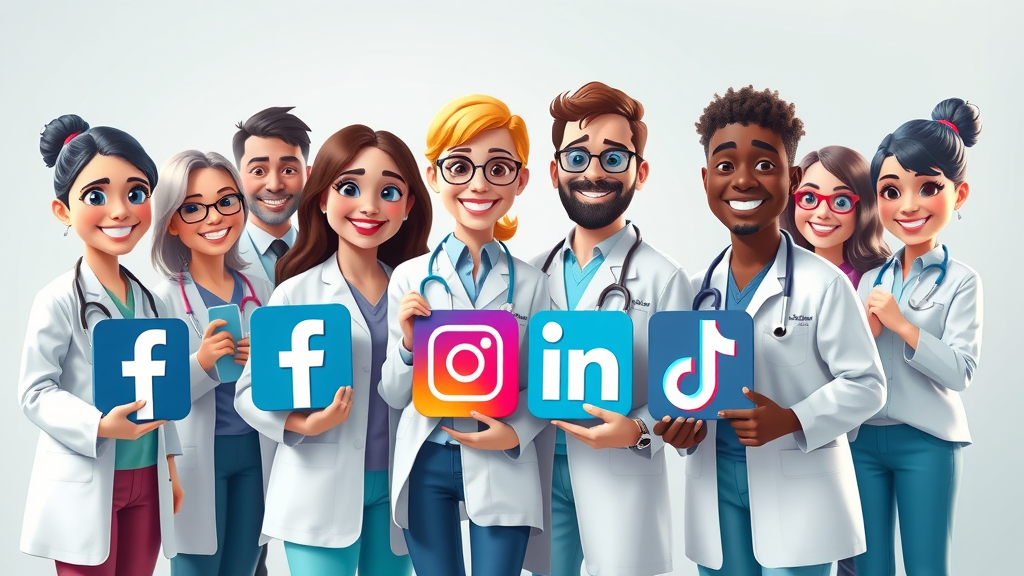
How Healthcare Providers Tailor Content for Each Social Media Channel
Smart healthcare organizations customize content by channel: concise wellness tips and event reminders for Facebook, behind-the-scenes visuals and health challenges for Instagram, professional milestones and collaborations for LinkedIn, and short, engaging tips for TikTok. Always match tone and style with the patient population and platform culture while maintaining brand voice, medical accuracy, and legal compliance.
Close collaboration between marketing, clinical, and compliance teams ensures that the content not only drives patient engagement but stands as a model for responsible, impactful care social media communication.
Content Creation and Media Strategy: Engaging Audiences in Healthcare
Effective social media marketing healthcare campaigns hinge on dynamic content that aligns with current patient needs. Invest time in creating infographics that distill complex medical information, interactive Q&A sessions to encourage questions and bust myths, and regular video tutorials offering actionable health tips. These formats consistently rank as the highest-engagement content, building loyal patient communities and spreading essential health education further than static brochures or newsletters ever could.
Consistency is key. Patients should know when and where to expect fresh content. Use your media strategy as a blueprint to deliver valuable, reliable information, positioning your healthcare organization as a pillar of both care and education in the digital space.
Types of Content Ranked for Patient Engagement: Infographics, Q&A, Video Tutorials
Visual stories
Myth-busting graphics
Live Q&A with healthcare providers
Stories drawn from local communities, patient triumphs, and new medical advances keep audiences interested and coming back for more. Rotate formats to serve different attention spans and literacy levels, ensuring accessibility for all patient groups.
Implementing a Social Media Strategy: Steps for Healthcare Providers
A step-by-step approach removes complexity from digital transformation. Start with an in-depth audience analysis to understand patient needs, behaviors, and preferred channels. Develop clear branded messaging guidelines so your team maintains a consistent organizational voice across all platforms. Create a regular schedule for photoshoots, video sessions, and post releases. Finally, commit to monthly performance reviews so you adapt, optimize, and stay ahead of the competition as industry trends evolve.
This process delivers sustainability and rapid results for care providers ready to move beyond trial-and-error marketing into a truly data-driven digital future.

Establishing a Content Calendar for Health Information Sharing
An editorial calendar is the backbone of your organization’s media presence. Use digital planning tools and good old-fashioned sticky notes to map out recurring themes, health observance days (like Breast Cancer Awareness Month), and provider spotlights. Clearly assigning ownership ensures deadlines are met, while color coding and reminders keep content releases smooth and collaborative. Integrate performance analytics to identify which posts resonate, and use this feedback to adjust frequency, timing, and format for even greater patient impact.
In times of crisis or emergency, a robust calendar allows you to pivot quickly and maintain ongoing, clear communication with your audience, reinforcing both public trust and organizational resilience.
Measuring Success in Social Media Marketing Healthcare
Without clear benchmarks, social media marketing becomes guesswork. Use performance dashboards and reporting tools to track vital KPIs including engagement rate, post reach, website conversions, and patient feedback. Insightful reporting surfaces trends and empowers timely course corrections, ensuring your digital investment pays dividends in real-world patient growth and satisfaction.
Take the opportunity to actively solicit feedback via polls, DM surveys, and testimonial requests so your healthcare organization can address gaps and capitalize on strengths in your media strategy.
Key Metrics: Engagement Rate, Reach, Conversions, Patient Feedback
Metrics drive improvement and transparency. Engagement rate (likes, shares, comments vs. total followers) highlights which content strikes a chord. Reach shows how many people see your message, while conversions measure actual patient actions, such as appointment requests. Regularly review patient feedback, noting recurring themes, questions, and concerns; this organic data is the gold standard for refining messaging and optimizing health communication strategies.
By tying digital metrics to patient outcomes and business goals, healthcare social media marketing becomes a sustainable driver of organizational growth and care excellence.

The Role of Analytics in Optimizing Media Strategy for Care Providers
Analytics are not optional; they are the navigational compass of social media in health. Dashboards that visualize trends in patient engagement, page growth, and campaign performance empower care teams to double down on successful tactics and adapt rapidly to shifting public health concerns. Use routine analytics reviews not only for reporting but as opportunities for team learning, process refinement, and creative brainstorming.
Set up automated alerts for significant changes in traffic or negative engagement, and use A/B testing to compare headlines, images, and posting schedules. This ongoing optimization is what separates exceptional healthcare marketing from the mediocre.
Staying ahead: Trends and Innovations in Social Media in Healthcare
The future of social media marketing healthcare is bright, driven by breakthroughs in automation, personalization, and digital patient support. Artificial intelligence (AI), chatbots, and scheduling tools are allowing providers to connect with patients 24/7, answer frequently asked questions instantly, and triage inquiries quickly to appropriate staff. As this technology matures, expect even greater patient satisfaction through seamless, personalized interactions on platforms patients already use daily.
Embracing innovation now primes your organization for sustained engagement, tech-enabled care, and the best possible health outcomes as media in healthcare continues to evolve.
AI, Chatbots, and Automation for Improved Patient Care via Media Marketing
Automated chat functions and AI-driven triage are revolutionizing how healthcare organizations interact with the public. By rapidly answering scheduling, insurance, or symptom questions — even outside business hours — you reduce staff workload, increase satisfaction, and keep patients connected through every stage of the care journey. Automation also ensures no query is missed, helping your healthcare provider brand stand out in a crowded, always-on marketplace.
Expect these innovations to further evolve, with language understanding, personalization, and predictive analytics making digital patient engagement more powerful and insightful than ever before.

Preparing for the Future: The Evolving Landscape of Media in Health
Continuous change is the new normal in digital healthcare marketing. Stay nimble by dedicating time each month to explore new tools, attend conferences, and connect with peers innovating in the space. Watch for new social media platform features or trends, such as augmented reality health demonstrations or patient support communities, to keep your media strategy ahead of the curve. Flexibility, curiosity, and a willingness to test new ideas are the best tools for future-proofing your digital presence and driving long-term practice growth.
Your commitment to learning and experimentation ensures your healthcare organization remains relevant, trusted, and patient-focused no matter how the digital landscape shifts.
Case Studies: Healthcare Providers Succeeding with Social Media Marketing Healthcare
Real-world examples confirm the transformative power of social media marketing healthcare . A pediatric clinic in the Midwest adopted a multi-channel strategy, posting patient-friendly video tips, interactive stories, and seasonal health reminders. In less than a year, new patient referrals doubled, and positive online reviews soared. Their secret? Targeted campaigns, relatable provider stories, and prompt online responses to parent questions generated buzz both online and in the local community.
Other healthcare organizations have successfully turned negative press into positive momentum by promptly addressing patient concerns on social media, transparently sharing follow-up actions, and inviting ongoing dialogue—showing that authenticity matters as much as broadcast reach.
Success story: Pediatric clinic doubles new patient referrals with focused social media strategy
This clinic’s approach was evidence-based: Weekly video health tips, myth-busting posts before back-to-school season, and patient success stories with parental consent—all delivered across Facebook and Instagram. The results were impressive: web traffic jumped 60%, community event participation increased, and their Google rating reached 4.9 after years at 4.0. Crucially, every team member received social media training to ensure compliance, brand consistency, and responsiveness around the clock.
The takeaway? When data-driven, creative, and patient-centric strategy is blended with disciplined execution, any provider can experience exponential practice growth.
Lessons learned: Mistakes to avoid with healthcare media marketing
Missteps are common, but preventable. Common mistakes include: using patient photos without signed consent, sharing unvetted medical opinions, or failing to respond promptly to critical reviews or misinformation. Missing consistent posting schedules can also lead to audience drop-off, while neglecting compliance and privacy standards can do reputational damage. Successful healthcare organizations create strict content approval processes, run regular staff training, and use analytics to identify weak spots before they become bigger problems.
The best media marketing is always proactive, patient-focused, and adaptable—ready to refine messaging if patient needs, platform norms, or regulations change.
Expert Insights: Quotes from Health Marketing Leaders on Social Media in Health
"In today’s digital age, every healthcare provider must become a media organization." — Chief Marketing Officer, Major Health System
"Effective social media in healthcare requires empathy, transparency, and regular communication with patients." — Renowned Healthcare Social Media Consultant
Essential Resources and Tools for Social Media Marketing in Healthcare
Leverage tried-and-true management tools to plan, publish, and track your content efficiently. Leading solutions like Hootsuite and Sprout Social streamline scheduling, allow A/B testing, and consolidate performance analytics. Canva for healthcare visuals creates branded, compliant graphics and infographics that make your posts stand out in busy feeds.
Healthcare professionals should also bookmark authoritative resources such as industry blogs, leading provider success stories, and official regulations in order to stay current and compliant in the fast-evolving media marketing landscape.
Recommended Social Media Management Tools for Healthcare Providers
Hootsuite
Sprout Social
Canva for healthcare visuals
People Also Ask: What Is the Role of Social Media in Healthcare Marketing?
Social media bridges communication gaps, educates the public on health issues, strengthens the reputation of healthcare providers, and enables active engagement with patients.
People Also Ask: What Is Social Marketing in Healthcare?
Social marketing in healthcare uses marketing principles to influence health behaviors, promote positive health information, and drive measurable actions that benefit public health and individuals.
People Also Ask: What Are the 5 P’s of Healthcare Marketing?
Product : The healthcare service or solution
Price : Cost to patients (financial, time, effort)
Place : Where and how care is delivered
Promotion : How information is shared (including media platforms)
People : The staff and patient interactions
People Also Ask: What Is the 5 5 5 Social Media Strategy?
The 5-5-5 social media strategy encourages spending 5 minutes commenting, 5 minutes sharing, and 5 minutes engaging with others’ content daily to boost social media presence and build relationships.
Frequently Asked Questions About Social Media Marketing Healthcare
How Can Healthcare Providers Remain HIPAA-Compliant on Social Media Platforms?
Providers should never share patient-identifiable information without explicit consent, and all content must be reviewed for compliance with current health care privacy laws. Regular staff education and content audits are vital to avoid legal pitfalls in healthcare social media.
What Type of Content Performs Best for Healthcare Marketing on Social Media?
Short videos, patient success stories, visual infographics, and live Q&A sessions consistently deliver high engagement. Timely health alerts and unique visual content also capture patient attention and drive shares across social media platforms.
How Do Healthcare Providers Manage Negative Feedback on Social Media Channels?
Providers should promptly acknowledge criticism, respond empathetically, and offer to resolve issues offline. Transparent, professional responses demonstrate commitment to quality care and can strengthen overall patient trust in the brand.
What Budget Should a Healthcare Provider Set for an Effective Social Media Strategy?
Budgets vary by practice size, but allocating 3–7% of total revenue to digital marketing — including paid promotions and content production — is a strong starting point for measurable, sustainable growth in social media marketing healthcare.
Take Action: Start Your Journey with Social Media Marketing Healthcare for Exponential Practice Growth
Now is the time to take action and unlock the full potential of social media marketing for your healthcare practice. Start by reviewing your current presence, setting clear goals, and implementing strategies that strengthen patient engagement and expand your reach. By tracking results and refining your approach, you’ll position your practice for exponential growth, loyal patients, and long-term success.




Write A Comment