
banida digital marketing agency logo
update

Banida digital

update
  • Home
  • Contact Us
  • All Posts
  • Social Media
  • 5-Star Reputation
  • SEO
  • Traffic
  • Funnels
  • Blogging
  • Advertising
  • Website
September 15.2025
12 Minutes Read

What Most Don’t Know About Electronic Health Records


A doctor using a futuristic digital tablet with glowing patient health data, holographic charts, and secure lock icons floating around, symbolizing electronic health records

Did you know that over 85% of office-based physicians in the United States now rely on electronic health records – yet many healthcare providers and patients alike are unclear on what these digital systems actually do behind the scenes? Electronic health records (EHRs) are more than just digital paperwork. They are reshaping the future of healthcare in ways most people never imagined.

In this comprehensive guide, we pull back the curtain on EHR systems to reveal surprising insights—plus important information every patient and practitioner should know. Whether you’re a medical professional, administrator, or an interested patient, you’re about to learn what truly sets electronic health records apart and how to leverage their full potential.

Electronic Health Records: The Statistic That Shocks Healthcare

When discussing healthcare evolution, one statistic stands out: close to 9 in 10 U.S. hospitals use certified EHR systems. Yet, despite widespread usage, misconceptions and knowledge gaps persist regarding the actual impact of electronic health records on patient care. For many, EHR adoption began as a compliance mandate, but its influence extends far deeper—affecting everything from patient safety to operational efficiency.

Electronic health records aren’t just a digital version of paper charts; they are dynamic systems that support real-time, coordinated patient care. For instance, recent studies suggest that EHRs can reduce medical errors by tracking drug interactions and allergy alerts, tangibly improving the quality of care. On the other hand, improper use or incomplete adoption can create new risks, such as alert fatigue or data privacy challenges. Understanding EHRs—beyond their surface function—can empower providers to better serve patients and transform how health information moves through the entire care system.

How Electronic Health Records Have Revolutionized Health Care Delivery

EHR systems have fundamentally changed how providers interact with patient data. Gone are the days of rifling through bulky paper files. Today, with a single click, a care provider can access a complete medical history, prior treatments, diagnostic lab results, and ongoing prescriptions for any patient—dramatically speeding up patient care decisions. Such access enables greater coordination across various specialties and care settings, eliminating duplicate tests and minimizing potentially harmful errors.

Modern electronic health record systems foster secure data sharing among multidisciplinary teams, even between organizations, thanks to stringent interoperability standards. This means a patient's clinical narrative follows them from a primary care office to a specialist or hospital in real time, enhancing continuity and quality of care. Add to this patient-facing features like health portals, and EHRs empower individuals to become more involved in their own health decisions.

Administrative burdens have also evolved. Automated billing, scheduling, and reminders embedded within EHR systems reduce paperwork and help streamline practice management. While not without challenges, this digital transition equips both patients and providers with better tools for health information management and engagement across the continuum of care.

As EHRs continue to transform the healthcare landscape, many organizations are also exploring how digital tools can further enhance patient engagement and care delivery.


Abstract concept of electronic health records: glowing network of connected hospitals, doctors, and patients, linked by secure digital lines, with a central medical file icon

Demystifying Electronic Health Records: What Everyone Should Know

At the heart of today’s healthcare technology revolution lies the electronic health record —a secure digital collection of patient medical information accessible in real time. While most practitioners are familiar with the transition from paper to digital, few appreciate the depth of transformation happening behind the scenes. EHRs consolidate data that was once siloed across different care settings, creating a single source of truth for each patient.

For care providers, EHR systems represent more than just recordkeeping; they support improved quality of care by offering reminders, supporting medical decision-making, and providing population health insights. For patients, this means fewer medical errors, tailored therapies, and the peace of mind that their health records can travel with them throughout the care system. But with innovation come new responsibilities, including mastering digital workflows and upholding stringent data security measures that protect sensitive patient information.

What Is an Electronic Health Record?

An electronic health record (EHR) is a comprehensive digital version of a patient’s paper chart. It goes beyond static documentation, acting as a living record that evolves as new patient data is generated. EHRs include medical histories, diagnoses, medications, immunization dates, lab and imaging results, allergies, and more—creating a holistic view that supports effective, safe care across healthcare providers and care settings.

What sets EHRs apart is their ability to integrate and organize complex information streams. Unlike paper charts or older electronic medical record (EMR) systems (which may be tied to one practice), EHRs support interoperability—sharing medical information across organizations, specialists, and even across geographic regions. This transformation has led to new standards for documentation, and more importantly, a strengthened foundation for preventing medical errors and promoting better outcomes.

In modern healthcare, the EHR is the central nervous system: it connects clinicians to pharmacies, labs, insurers, and, importantly, to patients themselves. These systems are built with user-friendly interfaces designed to streamline practice management, facilitate patient care coordination, and provide actionable intelligence from massive troves of health data.

Comparison of Electronic Health Record, EHR System, and Traditional Health Records

Feature

Electronic Health Record (EHR)

EHR System

Traditional Health Records (Paper)

Access

Real-time, multi-location, digital

Centralized, secured, often cloud-based

Single location, physical retrieval

Data Sharing

Interoperable between organizations

Facilitates inter-provider communication

Rarely shareable, manually faxed/copied

Security

Encryption, audit logs, digital access controls

Automated authentication and compliance settings

Locked cabinets, risk of loss/theft

Patient Engagement

Patient portals, e-messaging, access to records

Mobile, web-based interfaces

Requires in-person visits/request

Clinical Decision Support

Alerts, reminders, risk stratification

Integrated analytics and reporting

N/A

Core Components Inside Electronic Health Records

Modern Electronic Health Records (EHRs) are more than just digital charts—they’re comprehensive systems that support better care delivery and streamlined operations. At the foundation are patient demographics and medical histories, which capture everything from personal details to diagnoses, procedures, and prescriptions over time. This complete timeline not only supports day-to-day decision-making but also enables predictive analytics to improve future outcomes.

Another critical layer is clinical documentation and order entry. Physicians and nurses can enter notes, prescribe medications electronically, and request lab or imaging tests directly in the system. These records are authenticated, time-stamped, and available in real time, minimizing errors and ensuring everyone involved in a patient’s care has access to the same information. Automated alerts for immunizations, allergies, and medications further safeguard patients by flagging potential drug interactions or allergy risks.

On the operational side, EHRs integrate coding, billing, and workflow automation, making it easier for practices to manage insurance claims, reminders, and administrative tasks while reducing overhead. Added features like secure patient portals empower individuals to access their records, schedule appointments, and communicate with providers. Meanwhile, audit trails and secure document storage support compliance with regulations, giving both patients and providers confidence in the system’s reliability.


A healthcare provider and patient reviewing health data together on a large digital screen, emphasizing transparency and collaboration

Understanding EHR Systems: Types, Features, and Health Care Applications

Within the electronic health record landscape, not all EHR systems are created equal. Depending on the needs and scale of a practice or hospital, there are different types—each with distinct features and benefits. From physician-hosted solutions to sophisticated cloud-based platforms, understanding these categories can help both administrators and practitioners optimize patient outcomes and workflow.

Key features like interoperability, user interface customizability, mobile access, and robust security standards set leading systems apart. Beyond technical capabilities, successful adoption hinges on training, change management, and continuous improvement to ensure the technology serves clinicians rather than distracts from patient care.

EHR systems are not just for clinical documentation. They play a vital role in practice management, compliance reporting, quality metric tracking, and population health analytics. Choosing the right system requires weighing your organization’s priorities—such as scalability, integration with existing tools, patient engagement features, and regulatory needs—against the landscape of available providers.

The Three Types of EHR Systems Explained

Modern electronic health record adoption generally falls into three core categories: physician-hosted EHRs, remotely-hosted EHRs, and hybrid EHRs. Each type suits different medical environments and care settings.

Physician-hosted EHRs are maintained on-site by the healthcare provider, offering maximum local control over data. These setups are well-suited for large, resource-rich organizations but require dedicated IT support, making ongoing updates and disaster recovery critical to maintain business continuity.

Remotely-hosted EHRs are managed by third-party vendors and accessed via the cloud. This model is popular for its ease of implementation, lower upfront hardware costs, and automatic software updates. Security, scalability, and accessibility make cloud-based EHRs the choice for multi-site organizations and those prioritizing mobility.

The hybrid EHR model combines elements of both, delivering some resources locally while others are managed in the cloud. This approach gives healthcare organizations the flexibility to safeguard highly sensitive patient data while still leveraging cloud-based efficiency and accessibility when necessary. Choosing the optimal type depends on your patient population, regulatory pressures, and internal IT capability.
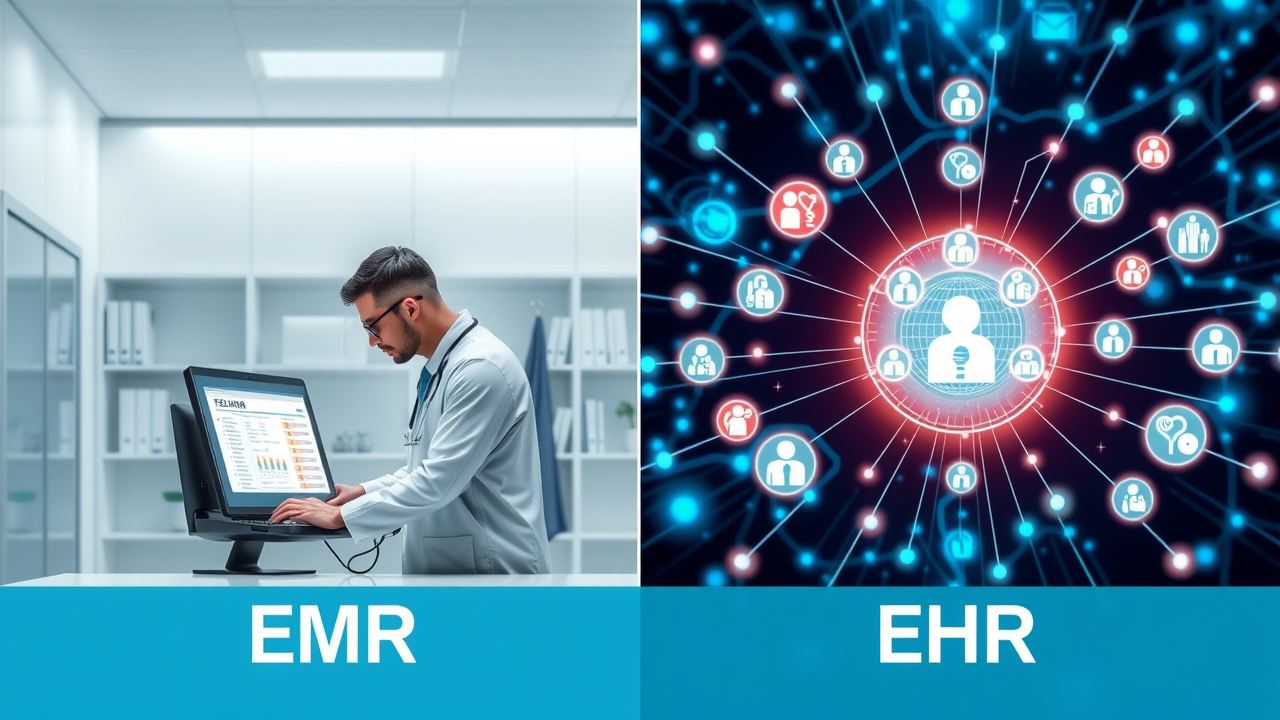

Side-by-side infographic-style illustration comparing Electronic Health Records (EHR) vs. Electronic Medical Records (EMR): on the left, a small clinic doctor using a computer with a limited patient chart labeled ‘EMR’; on the right, a connected network of hospitals, specialists, and patients sharing comprehensive digital data labeled ‘EHR’. Clean, modern, and professional healthcare design.

Electronic Health Records vs EMRs: Key Differences for Health Care Professionals

While the terms electronic health records (EHRs) and electronic medical records (EMRs) are often used interchangeably, they refer to fundamentally different tools in healthcare technology. EHRs deliver a robust, interoperable framework for sharing comprehensive patient care information across organizations and care settings, whereas EMRs are typically confined to a single provider or practice.

This key difference impacts the flow of health information and quality of care. While EMRs support efficient patient tracking within one office, they offer limited interoperability and can lock in data, leading to fragmented patient records. EHRs, by contrast, enable coordinated care by allowing healthcare providers to access and update medical information from multiple sources and specialties.

As health systems increasingly transition to value-based models demanding continuity and transparency, the ability to share and aggregate data via EHR systems becomes paramount. Awareness of these differences allows health care professionals to make technology choices that best support both clinical goals and patient needs.

How Electronic Health Records Differ From Traditional Health Records

The transition from traditional paper-based health records to EHRs represents not just a change in format, but a profound shift in capability. Manual records were susceptible to errors, duplication, and loss; finding and updating data required time-consuming searches or faxes. EHRs, in contrast, centralize patient information for immediate access by authorized users, wherever care is delivered.

EHRs support automated reminders for preventive screenings and vaccinations, reduce transcription errors through standardized forms, and simplify tracking outcomes over time. Digital storage means that vital health records can never be lost to fire, flood, or mishandling, as long as robust disaster recovery systems are in place.

EHRs empower patients, giving them access via secure portals to test results, visit summaries, and medication lists, fostering active participation in their care journey. This is a leap forward in health information management—a leap that enables smarter, safer, and more patient-centric care systems.


Minimalist illustration of a cloud-shaped server filled with medical icons (stethoscope, heart, pills, lab results), representing secure cloud-based EHR systems

Benefits and Challenges of Electronic Health Records in Health Care

One of the greatest promises of electronic health records (EHRs) is their ability to raise the standard of care for every patient. By giving clinicians real-time access to accurate, comprehensive data, EHRs support informed decision-making, reduce preventable errors, and track treatment effectiveness over time. These improvements directly enhance patient safety, streamline care delivery, and create more positive patient experiences. EHRs also empower providers to identify at-risk populations, apply evidence-based protocols, and coordinate care seamlessly across facilities, while built-in dashboards and analytics simplify the process of measuring progress toward efficiency, safety, and satisfaction goals. Patients benefit as well, gaining quicker access to results, stronger communication with their providers, and helpful digital reminders for preventive care.

Still, realizing these benefits comes with challenges. Clinicians must learn to balance documentation with patient interaction to avoid workflow fatigue, while organizations need to address strict data privacy regulations and interoperability hurdles when connecting systems. Effective training is key to ensuring new features enhance care rather than complicate it, and careful customization of alerts can prevent decision-support tools from overwhelming providers. By addressing these obstacles, healthcare practices can unlock the full potential of EHRs to deliver safer, more effective, and more patient-centered care.

Security, Privacy, and Compliance in Electronic Health Records

Storing sensitive medical information electronically offers new opportunities—and new risks. Security breaches, ransomware, and unauthorized access are critical concerns for every health care provider, regardless of organization size. That’s why robust security measures are required by law and industry best practices.

Modern EHR systems incorporate strong encryption, role-based access controls, continuous auditing of user activity, and multi-factor authentication. Periodic cybersecurity training further strengthens organizational defenses. Compliance with HIPAA, HITECH, and evolving data privacy regulations is essential to safeguarding trust between healthcare teams and their patients.

Establishing and enforcing security protocols requires ongoing vigilance as threats continue to evolve. Effective EHR use means balancing the accessibility required for timely, coordinated care with a zero-tolerance approach to privacy violations. Only by prioritizing both can healthcare organizations fulfill their mission and protect the people they serve.


Futuristic hospital with AI-driven dashboards, digital patient wristbands, and connected devices feeding into an EHR system

Future Trends: How EHR Systems Are Shaping Electronic Health Records in Health Care

Tomorrow’s electronic health records will look very different from today. Advances in artificial intelligence, wearable health monitoring, predictive analytics, and voice-driven documentation are poised to further streamline provider workloads and deepen personalized patient care. Secure, patient-controlled data exchange will empower individuals to decide when and with whom to share their health information.

Interoperability—once a major barrier—will become increasingly seamless. National and international data exchange standards continue to mature, supporting coordinated care across borders and specialties. Future EHRs will serve not just as digital archives, but as intelligent health platforms that anticipate needs, enable remote care, and even assist in predicting health issues before symptoms emerge.

For forward-thinking healthcare organizations and providers, keeping pace with these trends means embracing change, investing in workforce training, and continually evaluating how technology can best serve both clinical and patient communities.


Side-by-side comparison: a cluttered paper chart vs. a sleek digital dashboard showing EHR benefits, in infographic-style design

Important Takeaways About Electronic Health Records for Modern Health Care

Electronic health records are more than digital charts—they are powerful tools that enable providers to deliver safer, higher-quality, and more connected care. With real-time access to patient histories, evidence-based protocols, and built-in performance tracking, EHRs help clinicians make better decisions, improve outcomes, and streamline communication across the entire care team. Patients also benefit from faster access to results, clearer communication, and reminders that support preventive health.

At the same time, the true value of EHRs depends on how effectively they are managed. Protecting patient privacy, ensuring data security, and overcoming interoperability challenges are essential for success. Practices that invest in training, customization, and thoughtful integration can avoid pitfalls like alert fatigue or documentation overload, while fully unlocking the potential of EHRs to enhance both patient experiences and long-term practice efficiency.


A nurse or physician logging into an EHR system on a modern computer, with glowing interface showing patient summary, labs, and reminders

Frequently Asked Questions About Electronic Health Records

What is in an electronic health record?

Electronic health records contain comprehensive patient data including medical history, diagnoses, treatments, lab results, medications, immunization dates, allergies, and imaging reports. They also facilitate communication among health care professionals and improve record accuracy over traditional health records.

What are the three types of EHR?

The three main types of EHR systems are: Physician-hosted EHRs (on-site at medical facilities), Remotely-hosted EHRs (cloud-based by a third-party provider), and Hybrid EHRs (combining local and cloud elements for health care flexibility and security).

How secure are electronic health records?

EHR systems employ encryption, authentication protocols, and audit trails to keep records secure. Healthcare organizations must comply with strict legal standards to protect patient information from unauthorized access or cyber threats.

Can patients access their electronic health records?

Yes. Most modern EHR systems offer patient portals, granting individuals access to their records, results, and provider communication tools.

Are EHRs mandatory for healthcare providers?

In many countries, digital records are required for reimbursement or regulatory compliance, but requirements vary. In the United States, meaningful use criteria were established to accelerate adoption.

What is the main difference between EHR and EMR?

The main difference lies in scope—EMRs (Electronic Medical Records) are digital versions of charts within one practice, while EHRs (Electronic Health Records) are comprehensive, integrated records that offer a broader view of patient care across different practices and health care settings.


lose-up of a secure digital lock overlaid on patient charts, symbolizing data privacy and HIPAA compliance in EHRs

Take the Next Step: How To Leverage Electronic Health Records Effectively

Maximizing the impact of electronic health records starts with staff training, patient education, and systems designed to fit your workflow. Protect sensitive data, stay current with regulations, and explore virtual care integrations to expand access and efficiency. Just as EHRs are the backbone of your practice, a strong marketing strategy is the backbone of your growth, ensuring patients find you, trust you, and choose your services. Visit our website to learn more and unlock your practice’s full potential.



Leverage EHRs for Smarter Patient Care


Traffic

0 Comments

Write A Comment

*
*
Please complete the captcha to submit your comment.
Related Posts All Posts
05.22.2026

Digital Marketing Strategies for Dentists That Really Work

Did you know that more than 75% of dental patients search online before booking an appointment? If your practice isn’t using effective digital marketing strategies for dentists, you could be missing out on a large number of potential patients actively looking for dental care in your area. In today’s competitive digital landscape, success isn’t about flashy advertising—it’s about using proven, data-driven strategies that turn online searches into real appointments. In this guide, you’ll discover the most effective digital marketing techniques dental practices use to increase visibility, strengthen their reputation, and attract more patients. Keep reading to learn how to position your dental office at the top of local searches and transform curious browsers into loyal, long-term patients.Unlocking Success: Why Digital Marketing Strategies for Dentists Matter More Than EverIn today’s digital-first world, dental practices must do more than maintain a basic website or post occasionally on social media to stay competitive. Most patients now rely on search engines, online reviews, and digital profiles when choosing a dentist. By implementing effective digital marketing strategies for dentists, your practice can appear exactly when potential patients are searching for dental services or oral health advice. Techniques such as local SEO, social media marketing, and Google Ads help increase your visibility, build trust, and position your clinic as a reliable choice within your community.Mastering these strategies allows dental practices to attract more qualified leads, strengthen patient relationships, and consistently grow their appointment bookings. Through the smart use of content marketing, targeted advertising, and email outreach, dentists can educate patients, nurture long-term loyalty, and maintain a strong online reputation. In a competitive healthcare market, digital marketing is no longer optional—it’s a powerful tool that helps dental offices expand their reach, enhance credibility, and achieve sustainable practice growth.Building a Strong Foundation: Key Elements of Digital Marketing Strategies for DentistsAssessing Your Dental Office’s Current Digital Marketing StrategiesBefore you launch new digital marketing strategies for dentists, take a step back to review your current online presence. Search for your dental office in Google and other search engines: Does your business profile appear in local listings? Are your phone number, address, and services up to date on every platform? An audit of your website is also essential. Check for technical SEO fundamentals, making sure your site is mobile-friendly, loads quickly, and uses relevant keywords throughout key pages. This baseline assessment gives you a snapshot of where you stand and where there’s opportunity to rank higher and attract more potential patients.It’s also critical to examine your dental office’s social media accounts, listings, and any previous advertising efforts. Consistency across platforms builds trust with potential patients. Regularly monitoring your digital touchpoints ensures you’re not missing leads who discover your practice through less obvious channels like directories or review sites. By laying this groundwork, you set yourself up for marketing strategies that are efficient, targeted, and results-driven.Setting Measurable Goals in Your Dental Marketing StrategyNo marketing strategy is complete without clear, measurable goals. For dental practices starting or enhancing their digital presence, this means quantifying what success looks like. Ask yourself: How many new patient inquiries do you want each month? What is your target increase for website traffic or call leads? Setting tangible objectives helps you track progress and adapt quickly if results fall short. Look to top-performing dental offices for realistic benchmarks. If they’re averaging a certain rate of appointment bookings via digital marketing or seeing a consistent return on their Google Ads spend, use those numbers as a baseline for your practice.These goals also make it easier to justify investments in new social media campaigns, a refreshed website, or a more aggressive content marketing plan. When you know what you’re aiming for, every marketing dollar and minute spent moves you closer to your targets, transforming digital marketing from a guessing game into a strategic, powerful engine for long-term growth.Winning Patients Through Local SEO: Optimizing Digital Marketing Strategies for DentistsHarnessing Google Business Profile & Local Search Engine Optimization for Dental PracticesThe backbone of strong digital marketing strategies for dentists is local SEO. A fully optimized Google Business Profile ensures your dental office shows up when people search for "dentist near me" or similar phrases. To rank higher in search results, update every field in your profile, including accurate business hours, categories, and service descriptions. Encourage satisfied patients to leave detailed reviews; Google heavily factors these into local search engine rankings. Listings across directories like Yelp, Healthgrades, and local business sites also build trust, with consistent NAP (Name, Address, Phone Number) information further boosting your credibility with both people and algorithms.In addition to foundational steps like claiming and verifying your business profile, focus on acquiring quality backlinks and citations from community websites, dental associations, and reputable blogs. Each citation is a vote of confidence for your dental practice—helping you appear in the Local Pack (top map results) and drawing inquiries from nearby potential patients. Prioritizing local SEO gives your practice a sustainable advantage, making sure your digital presence always leads to your door.Technical SEO & Content Optimization for Dental OfficesStrong digital marketing strategies rely on technical SEO and effective content optimization. Start with on-page elements: Research and include high-intent keywords related to dental services on page titles, meta descriptions, and throughout your site’s content. Use descriptive alt text on every image, helping search engines understand your site and improving accessibility for potential patients. It’s also important to ensure every page has a clear, compelling meta tag—this can increase click-through rates in search results and attract more people searching for dental care.On the technical side, your website should load quickly, be secured with HTTPS, and use a clean structure for easy crawling. Implement schema markup so Google can display rich snippets, such as reviews and operating hours, enhancing your visibility. Well-structured websites also reduce bounce rates, keeping visitors engaged and signaling to search engines that your dental office is a trustworthy healthcare provider. Regular audits and updates keep your online presence sharp and ahead of competitors in the ever-changing digital landscape.Engaging Audiences: Social Media in Dental Marketing Strategies for DentistsChoosing the Right Social Media Channels for Your Dental PracticeChoosing the correct social media channels is essential for dental marketing success. For most dental practice teams, Facebook and Instagram offer broad reach and unrivaled patient engagement. Facebook allows for community interactions, event promotions, and informative blog posts, while Instagram is ideal for behind-the-scenes photos, before-and-after images, and short-form videos like Reels. LinkedIn can help attract referrals and partnerships, positioning you as an expert among other healthcare providers and professionals.Consider your target audience and what kind of content resonates: Younger potential patients engage with video and visuals, while older demographics may prefer educational articles. Blending video content (like quick dental tips or friendly office tours) with images and well-written blog posts caters to diverse patient preferences, builds trust, and humanizes your dental office online. Consistency is key; set a content schedule to keep your branding fresh and your dental practice at the forefront of local awareness.Social Media Marketing Tactics to Boost Patient EngagementEffective social media marketing goes beyond simple posts—it builds ongoing relationships. Start by showcasing real patient testimonials and before-and-after images (with permission). These posts give potential patients a sense of your dental office’s results and professionalism. Highlight special events, like community involvement or patient appreciation days, to show the human side of your staff and build positive emotional connections. Social media contests—like a teeth-whitening giveaway for sharing a post or referring a friend—drive rapid engagement, extend your reach, and attract new followers.Targeted ads on social platforms let you reach people based on specific interests, locations, or demographics. Serve ads to parents in your area for pediatric specials or target young adults for cosmetic dental treatments. Smart use of paid social media marketing, combined with organic posts, helps your dental practice stay visible in increasingly competitive feeds—turning online impressions into appointment requests and loyal patients.Increase Conversions with Google Ads and Paid Digital Marketing Strategies for DentistsCrafting High-Converting Google Ad Campaigns for Dental OfficesNo digital marketing strategy for dentists is complete without paid advertising, and Google Ads remain the gold standard. Start by conducting keyword research for services like teeth cleanings, dental implants, or emergency care. Use tools like Google Keyword Planner to find high-converting terms people search for in your area. Then, write clear, compelling ad copy that emphasizes benefits: “Same-day appointments available” or “Caring, gentle dentists.” Make sure your landing pages are concise, match the ad promise, and include a prominent phone number for easy conversions.Effective Google Ad campaigns use extensions—like sitelinks, location, and callouts—to provide more info and drive higher click-through rates. Regularly update negative keywords to filter out irrelevant searches. By investing in smart PPC, your dental office stays in front of patients actively seeking services, increasing the chances of securing new bookings ahead of local competitors.Measuring ROI from Google Ads and PPC StrategiesUnderstanding the ROI from Google Ads and other pay-per-click strategies is important for assessing your marketing spend’s effectiveness. Set up call tracking to log which inquiries come from ads, and use unique forms on landing pages to attribute online bookings. Google Analytics can tie website visits and click data to actual appointment conversions, offering a clear view of which keywords and ads drive the best outcomes for your dental practice. Review this data monthly to spot trends or areas for improvement—for instance, high clicks but low conversions may indicate your landing page or ad copy needs refinement.If you’re running multiple dental marketing strategies, compare their return on investment. Sometimes, a slightly higher cost per click is worthwhile if the patient becomes a regular. The key is to track results religiously and be ready to pivot your strategy to maximize every marketing dollar.Content Marketing Techniques to Position Your Dental Practice as an Industry LeaderCreating Educational Blog Posts and Videos for Prospective Dental PatientsContent marketing is a powerful way to establish trust and drive organic traffic. Start a blog featuring answers to common questions like “How often should I visit the dentist?” or create in-depth guides on the latest treatments. FAQs and oral health tips signal to Google that your site provides valuable expertise, boosting your search ranking. Videos are even more effective; a short explainer about dental implants or oral hygiene, posted on YouTube and your website, invites more engagement from potential patients who prefer visual content.Blog posts optimized for search engines can draw steady traffic long after posting. Choose topics relevant to your community—such as local insurance plans, pediatric dental issues, or cosmetic trends—and include target keywords throughout the content. Each well-crafted piece you publish stays working for your practice, attracting, educating, and converting visitors into brand-loyal patients.Repurposing Content Across Digital Marketing ChannelsEfficient dental marketing means making the most out of every blog post or video. Repurpose long-form guides into quick infographics, share dental tips as Instagram Stories, or cut educational videos into short clips for TikTok or Facebook. These bite-sized pieces keep your brand top-of-mind and help reach new audiences on every platform. A single blog post could become a week’s worth of social media content when broken down into quotes, checklists, and quick statistics.Across digital channels, use formats that encourage sharing—infographics, memes, “did you know” posts, and behind-the-scenes photos from your dental office. Each format attracts different viewer types: visuals for scrollers, bite-sized facts for browsers, and detailed guidance for serious researchers. By leveraging your best-performing content in multiple ways, your dental practice can maximize reach, engagement, and local reputation without doubling the work.Strategic Email Marketing for Patient Retention and ReactivationDesigning Automated Email Campaigns for Dental PracticesEmail marketing remains one of the most effective ways to retain patients and reactivate those who haven’t scheduled appointments. Automated recall reminders gently nudge patients to book their next cleaning, while appointment confirmations reduce no-shows. A monthly newsletter filled with dental tips, office updates, and limited-time offers keeps your practice top-of-mind. Modern email tools make it easy to segment messages by age, treatment type, or visit frequency, so every patient receives relevant and personalized communication.Unlike social media, emails reach patients directly in their inbox—giving your dental office a private, trusted channel to share important updates and keep patients engaged between visits. By automating the process, you’re freed up to focus on in-office care, knowing your marketing is still working in the background to build loyalty and drive repeat business.Best Practices for Personalizing Emails at Your Dental OfficePersonalization is the key to world-class email marketing. Segment your patient lists by demographic, appointment history, or even by dental services received. Send birthday greetings, hygiene tips for parents of young children, or special Invisalign promotions to adults. This targeted approach means patients only receive messages that are really relevant, improving engagement rates and boosting your reputation as a caring provider.Don’t forget to follow-up with feedback requests after appointments or procedures. Not only does this signal that you value every patient’s experience, but it also generates authentic testimonials and valuable reviews for your business profiles. Collecting feedback ties your digital marketing strategy directly to patient satisfaction and ongoing practice improvement.Tracking Performance: Analytics and Continuous Improvement in Digital Marketing Strategies for DentistsMonitoring the Results of Your Dental Marketing CampaignsConsistent tracking and analytics turn your digital marketing strategies from guesswork into precision. Use Google Analytics to see which blog posts, web pages, or ads attract the most visitors and conversions. Set up call tracking to pinpoint how many inquiries come from specific marketing initiatives—like which Google Ads campaign or Facebook post brought in a new patient. Many dental offices also ask new patients how they heard about the practice, adding a human element to patient source attribution.Analyzing these marketing metrics monthly reveals patterns: For example, you might notice that certain keywords consistently generate high-value appointments or that certain social media contests drive a spike in referrals. By understanding what’s working (and what’s not), your dental office can better allocate resources and continually improve its online presence and patient acquisition process.Adapting Digital Marketing Strategies Based on Analytics InsightsAnalytics are only powerful when put to use—continuous improvement is the hallmark of top dental marketing strategies. Experiment with new blog post topics, try different ad headlines, and introduce new social media content formats. Incorporate A/B testing with landing pages, email subject lines, or even appointment forms to see which version converts best. These small tests lead to big insights, enabling your dental office to stay ahead of the curve and outpace local competitors.Establish a feedback loop: Every change you make in your digital marketing strategy—based on accurate, real-time data—compounds over time. By consistently measuring, learning, and refining, your dental practice transforms digital marketing from a one-off project into a long-term engine for sustainable growth.Turn Strategy Into Growth: Your Roadmap to Digital Marketing SuccessSuccessfully implementing digital marketing strategies for dentists begins with a clear plan and consistent execution. Start by auditing your current digital marketing assets, including your website, social media profiles, and online listings, to identify opportunities for improvement. From there, establish clear and measurable goals for your dental practice—whether it’s increasing appointment bookings, improving local search visibility, or strengthening your online reputation. Prioritizing local SEO helps your dental office appear in searches from nearby patients, while launching targeted Google Ads campaigns allows you to reach individuals actively looking for dental services in your area.Equally important is creating a long-term engagement strategy. Establish a content calendar for blog posts and educational resources that answer patient questions and build trust in your expertise. Actively engage with patients through social media marketing to strengthen relationships and boost your practice’s visibility in the community. Complement these efforts with automated email marketing campaigns that send appointment reminders, helpful tips, and follow-ups to maintain patient loyalty. Finally, review your marketing analytics each month to evaluate performance, refine your approach, and ensure your strategies continue delivering measurable growth for your dental practice.Expert Answers to Frequently Asked Questions on Digital Marketing Strategies for DentistsHow often should a dental office update its website content?Dental offices should update website content at least quarterly. Frequent updates on services, team changes, and new blog posts signal to search engines that your site is active and trustworthy, helping you rank higher and keep patients informed.What is the budget range for an effective dental marketing strategy?A typical dental office invests between $1,000 and $5,000 per month in digital marketing strategies, including SEO, Google Ads, social media campaigns, and content marketing. The exact budget depends on the competitiveness of your area and your growth goals.Should dentists hire a digital marketing agency or manage campaigns in-house?While smaller practices may start in-house, most dental offices see better, faster results by hiring digital marketing professionals or agencies. Agencies bring experience, advanced tools, and ongoing optimization for more robust ROI.What are common mistakes dentists make in digital marketing?Common mistakes include inconsistent business profiles, neglecting mobile usability, ignoring local SEO, or not tracking conversions. Many also underutilize email marketing for patient retention and fail to respond to online reviews, missing chances to enhance reputation.Start Growing Your Dental Practice Today with Banida DigitalYour dental practice deserves a marketing strategy that consistently attracts new patients and builds lasting trust in your community. At Banida Digital, we help dentists transform their online presence with powerful digital marketing strategies—from local SEO and high-converting Google Ads to engaging content and data-driven optimization. If you’re ready to boost your reputation, increase appointment bookings, and achieve sustainable growth, now is the time to act. Visit Banida Digital’s website or contact our team today to schedule your free consultation and discover how our expert strategies can turn your digital presence into a reliable engine for patient growth.Discover Proven Dental Marketing Strategies

05.06.2026

Patient Engagement Through Digital Marketing: Boost Retention Now

Patient engagement through digital marketing boosts retention, strengthens loyalty, and enhances care experiences by connecting with patients where they are—online and on their terms.

03.09.2026

Clinic Patient Acquisition Secrets You Can’t Miss

Discover clinic patient acquisition secrets using Google ads targeting clinics to reach high-intent patients, boost bookings, and drive sustainable growth in today’s competitive healthcare market.

Terms of Service

Privacy Policy

Core Modal Title

Sorry, no results found

You Might Find These Articles Interesting

T
Please Check Your Email
We Will Be Following Up Shortly
*
*
*